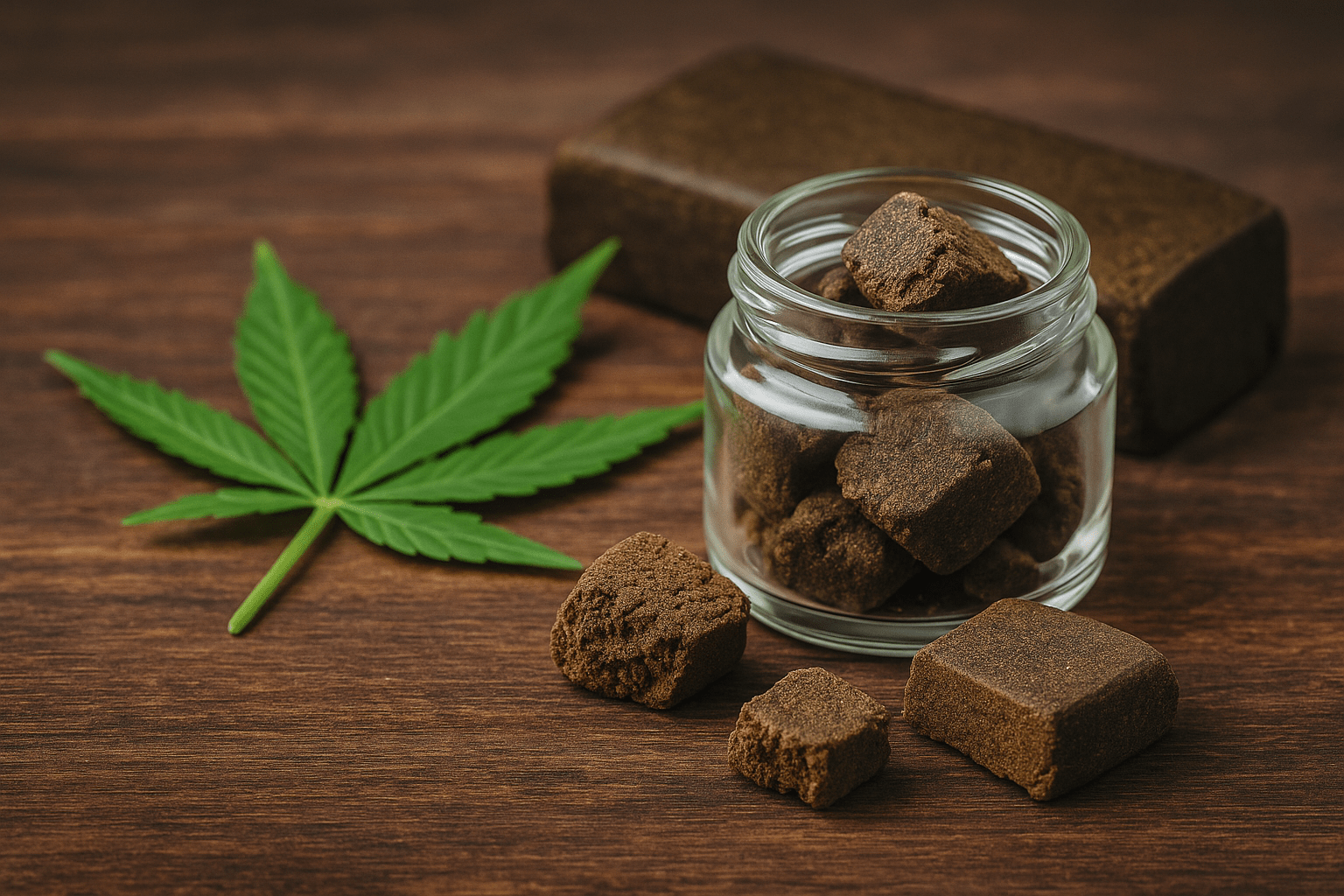
Dry Sift Process: Standardized Method for Extracting CBD Hash
Introduction
Dry sifting is a traditional and proven method for producing Hash, now widely adopted in the Cannabidiol (CBD) industry. This technique involves separating the trichomes from the hemp plant material through a mechanical friction process on screens of different sizes. Under Swiss legislation, hemp-based products whose total tetrahydrocannabinol (THC) content stays below 1% fall outside the narcotics regime. Contrary to what is often written, that threshold does not appear in the NarcA 1: it is set out in Annex 1 of the OTStup-DFI 2. Therefore, in the context of CBD Hash extraction, it is imperative to ensure that the hemp variety used and the final product comply with this threshold.
In this article, we will detail the entire dry sifting process based on reliable sources. We will describe the essential steps to obtain high-quality CBD Hash, the precautions to take to comply with Swiss legislation, and the recognized analytical controls to ensure a safe and compliant product. We will also discuss the importance of drying, sieve calibration, and trichome handling.
What is Dry Sifting?
Dry sifting is a mechanical separation process of the trichomes that cover the surface of hemp. These trichomes contain a large portion of cannabinoids (including cannabidiol, or CBD), terpenes, and other potentially beneficial compounds. The principle of the technique is relatively simple: plant material is passed over a fine, calibrated mesh surface (a sieve). Under the effect of friction, the resin glands detach and pass through the mesh, resulting in what is called “kief” or “pollen.”
Brenneisen’s reference synthesis counts 483 chemical constituents identified in cannabis, of which the cannabinoids form only one class among others, alongside terpenes, flavonoids and nitrogenous compounds 3. The figure “more than 100 cannabinoids” is often attributed to this 2007 text: it is better to keep the number it actually gives, that of constituents, and to note that the count of cannabinoids alone has been revised upwards by later work. CBD and THC are among the most well-known. The industrial hemp varieties approved in Switzerland are selected for their low THC content, allowing for the production of legal Hash from this resin when properly collected.
Legal Framework in Switzerland and Compliance Requirements
Legal THC Limit: 1%
In Switzerland, the total THC content must stay below 1% in finished hemp-based products, a threshold set by Annex 1 of the OTStup-DFI 2. If this threshold is exceeded, the products are considered prohibited narcotics. Therefore, for CBD Hash obtained by dry sifting, it is essential to ensure that the hemp variety used complies with the law and that laboratory tests are conducted to verify compliance with the 1% limit.
Mandatory Analytical Tests
Increasingly, Swiss producers of CBD Hash use accredited laboratories to analyze the composition of their products. These tests focus on:
- THC and CBD content.
- Possible solvent residues (although dry sifting does not require them).
- Microbiological contaminants (molds, bacteria).
- Heavy metals and pesticides.
These analyses ensure the safety and legal compliance of the products. Some Swiss structures rely on the ISO/IEC 17025 standard to guarantee the reliability of their laboratory results, a standard that specifies general requirements for the competence of testing and calibration laboratories.
Step-by-Step Approach: How to Perform Dry Sifting?
1. Selection of Hemp Variety
The first step is to choose a hemp variety rich in CBD and low in THC. The Swiss Confederation provides growers with a list of authorized varieties for the legal market, which must comply with the maximum THC content of 1% (Swiss Confederation, Narcotics Control Ordinance, RS 812.121.1). Among the most popular varieties are genetics from industrial hemp, as well as hybrids developed to maximize CBD while complying with legislation.
2. Preparation and Drying of Plant Material
Once the plant is harvested, careful drying is recommended. Too high a moisture content may promote the appearance of undesirable molds, while excessive drying can alter certain organoleptic properties (aromas, texture).
Established practice is gradual drying over 7 to 14 days, in a cool, airy room away from direct light, at around 15 to 21 °C and 50 to 60% relative humidity. These values come from horticultural custom rather than any published standard: we know of no study that has compared these parameters on CBD hemp and quantified their effect on the final profile. The underlying principle is well documented, however, terpenes being volatile and heat-sensitive 3.
3. Light Pre-Freezing of Plant Material
Before proceeding with the actual sifting, briefly placing the plant material in the freezer (2 to 24 hours) makes the trichomes easier to detach. The mechanism deserves to be described correctly: the gland head is held to its stalk by an abscission zone, a constricted weak area at its base, and that is where it gives way 4. Cold makes the resin, a viscous lipid mixture, markedly more brittle, so the heads snap off cleanly instead of smearing. The aim is therefore to harvest whole heads, not to “break” them. However, care should be taken not to over-freeze to avoid condensation and the formation of ice crystals that could damage overall quality.
4. Choice of Sieve Size
Dry sifting relies on sieves with rigorously chosen mesh sizes. Several calibers exist, for example:
- 150 microns
- 120 microns
- 90 microns
- 73 microns
Each of these meshes retains particles of specific sizes, influencing the profile of the final Hash. The choice makes more sense against the real size of the glands: on industrial hemp, heads average 80 µm on living plants and shrink by 14 to 25% on drying, so roughly 65 to 70 µm by the time of sifting 4. A 150 micron mesh therefore passes the heads along with a good deal of plant material, hence a darker and bulkier product. A 73 micron mesh sits right at the diameter of the glands: it holds back most of the debris while letting the heads through, which is why the product is lighter. Going markedly finer does not concentrate further, since you then drop below the diameter of the glands themselves.
5. Setting Up the Sifting Protocol
There are different ways to set up the sifting protocol:
- Manual method, gently rubbing the hemp on the sieve surface in circular motions.
- Use of a multi-sieve box (often called a “Dry Sift Box”), which allows for several consecutive sifting passes with increasingly fine meshes.
- Automated machines, mainly used by larger producers, which ensure time savings and uniform production.
The key point is to use powder-free nitrile or latex gloves (for cleanliness and product protection) and a sterile surface to avoid contamination. Additionally, ambient temperature plays a role: the cooler it is, the easier the separation of trichomes.
6. Collection of the Obtained “Kief” or “Pollen”
The result of sifting often takes the form of a fine, yellowish to light brown powder, whose consistency can vary depending on the degree of oxidation. This trichome-rich powder is called “kief” before being pressed to obtain Hash.
To collect this kief, gently retrieve the accumulated powder on the lower surface of the sieve (or the sieve box) using a card or stainless steel spatula. It is crucial to handle the collected material as little as possible to avoid oil transfer from the skin or external contamination.
7. Pressing the Hash
Once a sufficient amount of kief is collected, the powder can be pressed to form more compact CBD Hash blocks. This pressing can be done:
- By hand, wrapping the powder in parchment paper and using the heat of the palm.
- Using a manual screw press.
- Using a hydraulic press for larger volumes.
Hot pressing promotes partial fusion of the resin glands and creates a malleable texture. Cold pressing, on the other hand, preserves more heat-sensitive compounds. The choice of technique depends on organoleptic preferences and the intended commercial use.
Final Quality and Evaluation Criteria
Color
The color of the obtained Hash can range from golden to dark brown, depending on the mesh fineness, hemp maturity, drying quality, and oxidation. Connoisseur circles often consider golden or light brown shades to be synonymous with high quality in dry sifting.
Texture and Consistency
Freshly produced CBD Hash by dry sifting often has a powdery or slightly sticky consistency, which can harden over time. Some variants remain softer if hot pressing is applied.
Terpene Profile
The aromatic (or terpene) profile is a major differentiation criterion between different Hash production methods. Dry sifting performed at relatively low temperatures (and in a dry environment) helps preserve the original aromas of hemp. Brenneisen (2007) reminds us that terpenes are fragile and can degrade at high temperatures.
Compliance with Standardization and Quality Controls
Good Practice Standards
In professional production of CBD Hash via dry sifting, Good Manufacturing Practices (GMP) must be observed to ensure consumer safety. Several European countries and Switzerland recommend hygiene and traceability criteria to meet official control requirements, although these requirements also depend on product classification (food, cosmetic, etc.).
Laboratory Controls
It is now very common to conduct laboratory analyses before market release (Federal Office of Public Health, guidelines on low-THC cannabis). These analyses focus on:
- THC concentration (<1% for Switzerland).
- CBD concentration.
- Traces of pesticides and heavy metals.
- Microbial contaminants.
Swiss producers often provide test results to their customers to establish trust and ensure transparency.
Storage Tips
For CBD Hash obtained by dry sifting, storage plays a major role in preserving taste qualities and cannabinoid content. The storage parameters below reflect industry practice rather than any official recommendation. They target three distinct and well-documented forms of degradation: oxidation, terpene volatilisation, and the slow decarboxylation of residual CBDA, which continues even at room temperature. It is advisable to store Hash:
- In an airtight container away from light.
- At a moderate temperature (ideally between 15°C and 20°C).
- With controlled humidity (around 55-60%) to prevent mold formation.
Over time, cannabinoids, including CBD, can degrade, resulting in a loss of potency. However, when well-preserved, CBD Hash remains stable longer than a simple hemp flower due to its low plant material content and compressed format.
Modes of Consumption
Vaporization
Many people prefer to vaporize CBD Hash to enjoy its aromas. Specialized vaporizers allow precise temperature control, thus avoiding combustion. The ranges used in vaporisation generally sit between 160 and 220 °C. The reference study on a hot-air vaporiser worked at 200 °C and showed that at this temperature the device delivered THC reproducibly, with an efficiency comparable to smoking but without the combustion products 5.
Infusion and Culinary Preparations
CBD Hash can also be used in cooking, in infused oils or specific recipes. It is crucial to follow a moderate decoction or decarboxylation process for the CBD to become available and retain its properties.
Other Considerations
One point is worth knowing as a consumer. The reference analysis of CBD product quality examined 46 samples from the market and found that, among those declaring a content, the measured values differed strongly from the label; seven samples contained no detectable cannabinoids at all, and part of the batch exceeded 1% THC 6. That finding concerns oils rather than hash, but it justifies the same discipline: trust the certificate of analysis rather than the packaging.
Advantages and Disadvantages of the Dry Sift Method
Advantages
- Solvent-free method, reducing the risk of chemical residues.
- Preservation of terpene profiles if the process is done at low temperatures.
- Adaptable to different production scales (artisanal or industrial).
- Enhanced quality control and easy verification of compliance with the legal THC limit of less than 1%.
Disadvantages
- Process can be long and labor-intensive in its manual version.
- Requires precise and costly sifting equipment if a very high-quality product is desired.
- Less dense resinous material extraction than other methods like solvent extraction or the Ice-O-Lator method.
Comparison with Other Extraction Techniques
Dry Sifting vs Ice-O-Lator (Bubble Hash)
The Ice-O-Lator, also known as Bubble Hash, requires ice water and filter bags rather than traditional sieves. This technique captures a broader spectrum of particle sizes by using different filters. It can sometimes extract more resin due to the combined action of ice water and agitation, but the final product may require a longer drying time to expel all residual moisture.
From an analytical standpoint, both methods meet the same controls under Swiss legislation. However, dry sifting has the advantage of not involving water or solvents, thus limiting post-extraction management (drying, filtration) and the risk of mold.
Dry Sifting vs Supercritical CO₂ Extraction
Supercritical CO₂ extraction is mainly practiced in the industry to obtain more intense CBD concentrates. Although effective, it requires sophisticated equipment and advanced expertise. In Switzerland, specialized companies offer this type of service, ensuring a result compliant with legislation. However, the resulting product (often in the form of concentrated oil or paste) does not have the same texture or traditional appearance as Hash obtained by dry sifting.
Good Handling Practices
Handling CBD Hash must be done with care to avoid contamination. This involves:
- Using gloves to prevent the transfer of body oils or bacteria.
- Cleaning and disinfecting the workspace before and after each sifting session.
- Storing plant material and obtained Hash in clean or sealed containers to prevent pollution by external agents.
- Adapting clothing (gown, cap, masks) for professional volumes or productions adhering to strict specifications (such as GMP).
Future Prospects and Innovations
The CBD market is rapidly evolving in Switzerland and internationally. Companies are now specializing in the automated production of high-quality CBD Hash, using a sequence of decreasing size sieves and optical scanners to control the absence of impurities.
Meanwhile, Swiss control laboratories are intensifying their research efforts to optimize the detection of minor cannabinoids. Some of these cannabinoids (CBG, CBC, etc.) are generating growing scientific interest. We can therefore expect a diversification of product ranges, including Hash richer in certain specific cannabinoids and rigorously tested in laboratories.
Conclusion
Dry sifting represents one of the oldest and most reliable methods for extracting CBD Hash. Through a sequence of calibrated mesh sieves, this technique allows for the collection of trichomes rich in cannabinoids and terpenes, without the use of solvents.
In Switzerland, the total THC content must stay below 1% in all hemp-derived products, a threshold carried by the OTStup-DFI and not by the NarcA 1 2, which makes it essential to monitor the variety and systematically verify the final product. Laboratory analyses are therefore a guarantee of safety for consumers and credibility for producers.
The growing popularity of CBD stimulates innovation, both in sifting equipment and quality control procedures. When well-stored, CBD Hash from dry sifting retains its organoleptic properties and cannabinoid profile for a long time, making it a highly appreciated product among enthusiasts and connoisseurs.
In the end, dry sifting embodies an artisanal and authentic approach that harmoniously integrates into the rise of the CBD industry in Switzerland, while respecting the strict legal framework and increasing demands for traceability, transparency, and quality.
Sources
Footnotes
-
Swiss Confederation. Federal Act on Narcotics and Psychotropic Substances (NarcA), RS 812.121. https://www.fedlex.admin.ch/eli/cc/1952/241_241_245/en ↩ ↩2
-
Swiss Confederation. FDHA Ordinance on the Lists of Narcotics, Psychotropic Substances, Precursors and Chemical Adjuvants (OTStup-DFI), RS 812.121.11, Annex 1. https://www.fedlex.admin.ch/eli/cc/2011/363/fr ↩ ↩2 ↩3
-
Brenneisen R. “Chemistry and Analysis of Phytocannabinoids and Other Cannabis Constituents”, in ElSohly M. A. (ed.), Marijuana and the Cannabinoids, Humana Press, 2007, ch. 2, pp. 17–49. https://doi.org/10.1007/978-1-59259-947-9_2 ↩ ↩2
-
Small E., Naraine S. G. U. “Size matters: evolution of large drug-secreting resin glands in elite pharmaceutical strains of Cannabis sativa (marijuana)”, Genetic Resources and Crop Evolution, 2016, vol. 63, pp. 349–359. https://doi.org/10.1007/s10722-015-0254-2 ↩ ↩2
-
Hazekamp A., Ruhaak R., Zuurman L., van Gerven J., Verpoorte R. “Evaluation of a vaporizing device (Volcano) for the pulmonary administration of tetrahydrocannabinol”, Journal of Pharmaceutical Sciences, 2006, vol. 95, no. 6, pp. 1308–1317. https://doi.org/10.1002/jps.20574 ↩
-
Hazekamp A. “The Trouble with CBD Oil”, Medical Cannabis and Cannabinoids, 2018, vol. 1, no. 1, pp. 65–72. https://doi.org/10.1159/000489287 ↩