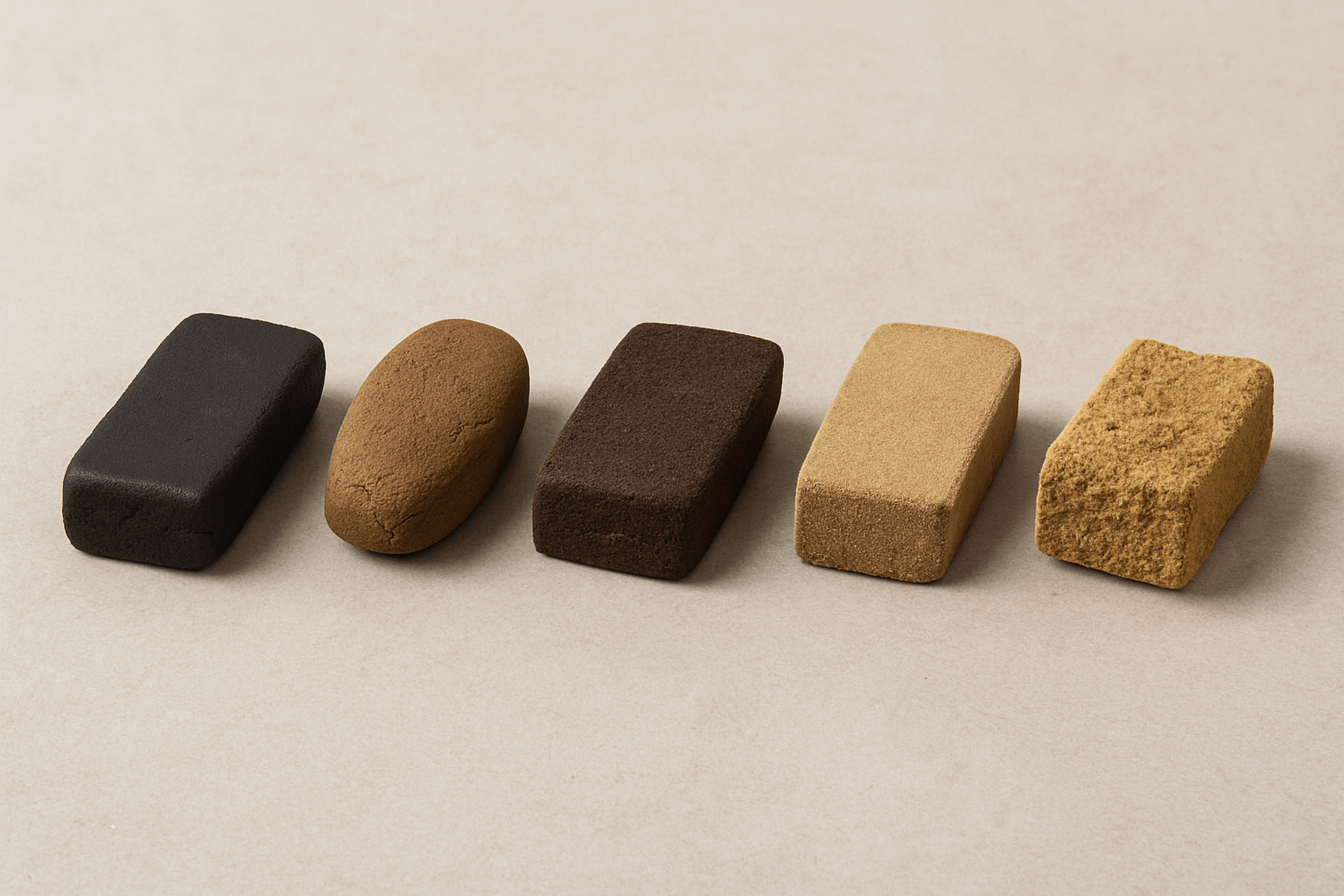
Ice-o-lator: Ice Water Extraction Protocol
Introduction
The Ice-o-lator, also known as ice water extraction, is an artisanal and mechanical process used to separate resin from hemp flowers. This method relies on the agitation of trichomes at low temperatures to extract a hash pure in cannabinoids, particularly cannabidiol (CBD). Unlike some more complex extraction techniques, the Ice-o-lator does not require the use of chemical solvents. This makes it a favored method for producing a final product described as “solventless,” meaning free of potential solvent residues.
In Switzerland, the cultivation and processing of hemp varieties with a THC content below 1% are encouraged by a clear legal framework. That threshold, however, sits neither in the NarcA nor in Article 2 of the Narcotics Control Ordinance, contrary to what is often written: it appears in Annex 1 of the FDHA Ordinance on the Lists of Narcotics (OTStup-DFI, RS 812.121.11) 1 2. Hemp whose total THC content stays below 1% therefore falls outside the narcotics regime. For CBD hash enthusiasts, the Ice-o-lator represents not only a reliable production method but also a way to comply with this strict legislation while obtaining a product of excellent quality.
In this article, we will examine in detail the protocol, its strengths, and its limitations. We will also discuss precautions to take during production and storage to ensure a CBD hash that complies with Swiss legal standards and good laboratory practices.
What is the Ice-o-lator?
The term “Ice-o-lator” refers to a set of filter bags and the extraction technique that relies on using cold water and ice to separate trichomes from hemp plant material. Trichomes are the small glands found on the surface of flowers and leaves, responsible for producing cannabinoids (including CBD and THC) and terpenes (aromatic compounds).
The Ice-o lator method is particularly popular among artisans and small laboratories capable of performing extractions in small or medium quantities. The absence of solvents makes the process safer, as the risks of explosion or contamination by chemicals are reduced. It would be wrong, though, to conclude that the process guarantees a superior extract. The reference review of cannabis processing methods places water extraction among the techniques offering limited control of potency and being difficult to upscale, for a result comparable to dry sieving 3. The absence of solvent is a genuine safety advantage; it is not in itself a guarantee of concentration.
Swiss Legal Framework for Hemp and Its Products
In Switzerland, cannabis legislation is governed by the Narcotics and Psychotropic Substances Act (LStup, RS 812.121) and its implementing ordinances (the OCStup and the OTStup-DFI already mentioned). This framework provides that:
- Cannabis varieties with a THC content of 1% or less are not considered narcotics.
- Derivative products, such as hash or CBD oil, are authorized for sale if they meet the same maximum THC threshold.
- “Swiss Made” labels require strict compliance with production and traceability standards.
It is sometimes claimed that legal hemp cultivation is free “according to Article 31 of the LStup”. That reference does not hold: Articles 31 to 34 of the Act were repealed, with effect from 1 July 2011 1. The word “hemp” appears nowhere in the Act, which merely lists prohibited narcotics in its Article 8 and delegates the drawing up of the schedules to the FDHA. It is therefore the OTStup-DFI, and it alone, that fixes the 1% threshold 2. Any extraction aimed at producing a final product exceeding the legal THC limit risks sanctions. For this reason, it is crucial to ensure that the flowers used in an Ice-o-lator have a sufficiently low THC content. Preliminary laboratory analyses can confirm this.
Scientific Principles of Ice Water Extraction
Solubility and Density of Trichomes
The key to the Ice-o-lator process lies in the density difference between trichomes and the remaining plant material. Once detached, trichomes are heavier than the rest of the plant tissues and tend to settle at the bottom of the system, while unwanted particles remain suspended or float on the surface.
The mechanism is often described poorly. Cold does not “tighten” cell walls: the gland head is joined to its stalk by an abscission zone, a constricted weak area at its base, and that is where it detaches under agitation 4. What ice water does is make the resin, a viscous lipid mixture, markedly more brittle: at low temperature the heads snap off cleanly instead of smearing and sticking to plant material. Cold therefore serves the cleanliness of the separation, not any “fracturing” of the glands, which on the contrary you want to collect intact.
Roles of Filter Bags
The standard Ice-o-lator setup includes a set of filter bags, often called “bubbling bags” or “ice bags.” Each has a precisely calibrated mesh, allowing a certain size of trichomes to pass through while retaining larger or smaller particles. The goal is to collect different qualities of resin based on their granularity. The calibration makes more sense once you know the real size of the glands: on industrial hemp, heads average 80 µm on living plants and shrink by roughly 14 to 25% on drying 4. A 220-micron bag therefore holds back only plant debris, and it is the 120 to 73 micron screens that collect the bulk of the gland heads.
Thanks to this multi-stage system, it is possible to obtain several qualities of hash from the same plant. A clarification is needed here, because the idea that “finer means more concentrated” is widespread and wrong at both ends. Above 160 microns you do collect a bulky, weakly concentrated hash, essentially plant material. But below 45 microns you drop beneath the diameter of hemp gland heads: that fraction no longer gathers whole glands but immature heads, fragments and fine debris. It is traditionally treated as a by-product, not as the richest grade.
Steps of the Ice-o-lator Protocol
In this section, we detail step-by-step the implementation of the Ice-o-lator process. We will also provide some tips for achieving a high-quality result without exceeding the legal THC limit (1%).
1. Selection of Hemp Flowers
- Choose a hemp variety rich in CBD and compliant with Swiss legislation (0.2 to 0.8% THC on average for varieties authorized on the market).
- Verify the origin and ensure that the producer has laboratory analyses confirming the THC content. In Switzerland, laboratories accredited to ISO/IEC 17025 by the Swiss Accreditation Service (SAS) issue detailed reports on cannabinoid composition; the SAS register is public 5.
2. Preparation of Equipment
- A bucket (or reservoir) large enough to hold water, ice, and plant material.
- A thermometer to check the water temperature (it should ideally remain below 4°C).
- Filter bags of different mesh sizes (e.g., 220, 160, 120, 73, 45 microns).
- A manual mixer or a large wooden spoon for gentle stirring.
- Latex or vinyl gloves to maintain the cleanliness of the mixture.
3. Initial Cooling
- Fill the bucket halfway with cold water.
- Add enough ice to lower the temperature below 4°C.
- Let it sit for a few minutes to reach the desired temperature.
4. Mixing the Mixture
- Place your hemp flowers (roughly crumbled) in the ice water.
- Stir gently for 10 to 15 minutes to allow trichome separation. Avoid overly vigorous movements, which could crush the plant material and reduce hash quality.
- Then let the mixture rest for a few minutes so that the trichomes detach and settle.
5. Step-by-Step Filtration
- Place the largest bag (220-micron mesh) over another container.
- Gently pour the water mixed with plant material to retain the largest debris in the 220-micron bag.
- Repeat the operation with progressively finer mesh bags (160, 120, 73, 45 microns). At each stage, you filter the trichomes more finely until you obtain different grades of resin in each bag.
6. Collection and Pressing
- Collect the resin accumulated at the bottom of each bag, usually using a small spatula or plastic spoon.
- Place the resin on a sieve or absorbent paper to remove excess water.
- Gently press the material to speed up drying and form a compact paste. Avoid overheating it, as heat can alter the terpenes.
7. Final Drying
- Spread the pressed resin on parchment paper in a cool, dry place.
- Turn it regularly for even evaporation.
- Ensure that the moisture content is as low as possible before proceeding to potting or bagging. Insufficient drying can lead to mold growth, rendering the product unusable.
Advantages and Limitations of the Ice-o-lator Process
Advantages
- Solvent-free process: The use of ice water eliminates any risk of residual solvents.
- Preservation of terpenes: Low temperatures limit the evaporation of aromatic compounds and preserve the olfactory profile of hemp.
- Modular productivity: It is possible to extract small or large quantities by adjusting the size of the bucket and the number of filter bags.
- Quality control: Multiple filtration allows for obtaining different qualities of hash, some very pure in CBD.
Limitations
- Manual and tedious work: Stirring and filtering require time and energy.
- Residual moisture content: Meticulous drying is essential to prevent mold formation.
- Risk of loss: Too vigorous stirring or poor bag calibration can lead to trichome loss.
- Amount of ice: Temperature management requires large amounts of ice, which can represent a logistical cost.
THC Analysis and Compliance
To ensure the legality of your Ice-o-lator, it is recommended to have the final extract analyzed by a Swiss accredited laboratory (SAS). The analysis will mainly focus on:
- THC content (must be 1% or less).
- CBD content (a determining factor for the product’s value).
- Detection of potential contaminants, such as bacteria or heavy metals.
Analysis reports not only prove the compliance of CBD hash with the law but also inform the consumer precisely about what they are purchasing. Products with a quality label guaranteeing traceability, absence of pesticides, and low THC content are increasingly popular in the Swiss market.
Storage and Consumption Methods
Optimal Storage
- Store your Ice-o-lator in an airtight container, away from light and heat.
- Maintain a stable temperature between 15 and 20°C to preserve terpenes.
- Reduce exposure to air to prevent oxidation, which can slowly degrade hash quality.
Proper storage is essential to maintain the product’s chemical stability and to ensure the consumer a cannabinoid profile consistent with the labelling. Residual CBDA decarboxylates slowly even at room temperature, and heat accelerates that drift: a poorly stored batch eventually stops matching its own certificate of analysis.
Consumption Methods
- Vaporization: Using a vaporizer suitable for concentrates allows heating the hash to a temperature lower than combustion, preserving more terpenes and reducing the inhalation of potentially harmful substances.
- Ingestion: In some cases, it is possible to incorporate Ice-o-lator into culinary recipes, but it is important to master dosages due to the CBD concentration.
- Combustion: This practice, although common, is increasingly discouraged for respiratory health reasons.
- Dabbing: A consumption method reserved for very pure extractions. It is crucial to use appropriate tools (quartz or titanium nail), as the temperature must be precisely controlled.
Frequently Asked Questions (FAQ)
Is it legal to make your own Ice-o-lator in Switzerland?
Yes, as long as you work with hemp varieties whose THC content does not exceed 1%, and you do not exceed this limit in the extracted resin. Note the exact wording: what counts is the total THC content, which must stay below 1%, a threshold set by the OTStup-DFI 2. You must also comply with the NarcA 1 and the OCStup 6.
What are the risks if the final product exceeds 1% THC?
In Switzerland, a cannabis-derived product containing more than 1% THC is considered a narcotic. Its possession or commercialization can lead to criminal penalties according to the LStup. It is therefore essential to conduct laboratory analyses to ensure compliance with this legal limit.
Can trim leaves be used instead of flowers?
Yes, trim leaves can be used, but their trichome content is generally lower than that of flowers. The yield and CBD concentration will therefore be lower. Some Swiss companies opt for a combination of both to maximize the plant’s profitability while maintaining good product quality.
What is the average shelf life of Ice-o-lator?
Under optimal storage conditions (temperature, darkness, airtightness), Ice-o-lator can be preserved for several months, or even up to a year without major organoleptic losses. However, it is often recommended to consume it within the first six months to fully enjoy its terpene profile.
Is Ice-o-lator safer than other extractions?
Safety primarily depends on the mastery of protocols and the quality of the raw material. Ice-o-lator does not use any volatile solvents (such as butane or ethanol), eliminating the risk of explosion and limiting the presence of chemical residues. It is therefore a recognized process for its simplicity and reliability, provided that hygiene and traceability measures are respected.
Good Practice Tips and Precautions
- Strict hygiene: Systematically clean your utensils and filter bags before each use to avoid cross-contamination.
- Temperature management: Ensure you have enough ice to keep the temperature low throughout the process.
- Preliminary analyses: Check the THC content of the raw material before starting, then have the finished product analyzed.
- Labeling: Note on the packaging the production date, CBD and THC content confirmed by a laboratory, and the estimated shelf life.
- No uncontrolled additives: Avoid adding flavors or other substances not validated by a laboratory. Adding aromas can harm the chemical stability of the hash and complicate its legal compliance.
These precautions ensure a high-quality finished product, compliant with legislation, and safe for the consumer.
Conclusion
The Ice-o-lator technique, or ice water extraction, stands out as a preferred method for obtaining CBD hash rich in flavors and free of solvents. Based on a principle of density and gentle agitation, this protocol requires some expertise to achieve optimal quality. Its main advantage lies in obtaining a natural final product while reducing risks associated with chemical solvents or complex legislation.
In Switzerland, cannabis legislation with less than 1% THC offers producers and consumers a clear framework. Thanks to the NarcA 1, the OCStup 6 and above all the OTStup-DFI, which carries the actual figure 2, it is possible to legally manufacture and market hemp-based products, provided the total THC content stays below the authorised limit. The Ice-o-lator fits perfectly into this dynamic, provided that the compliance of the raw material is ensured in advance and laboratory analyses are conducted on the final product.
Practiced for many years, the Ice-o-lator has gained the trust of consumers and artisans alike. A safe and accessible method, it nevertheless requires investment in time and precautionary measures. To enjoy all the benefits of CBD hash, it is highly recommended to adhere to good production practices, maintain equipment cleanliness, and monitor the THC content of each batch. The result is worth it: an artisanal extract, flavorful, and respectful of both consumer health and current Swiss regulations.
Sources
Footnotes
-
Swiss Confederation. Federal Act on Narcotics and Psychotropic Substances (NarcA), RS 812.121. Articles 31 to 34 were repealed with effect from 1 July 2011. https://www.fedlex.admin.ch/eli/cc/1952/241_241_245/en ↩ ↩2 ↩3 ↩4
-
Swiss Confederation. FDHA Ordinance on the Lists of Narcotics, Psychotropic Substances, Precursors and Chemical Adjuvants (OTStup-DFI), RS 812.121.11, Annex 1. https://www.fedlex.admin.ch/eli/cc/2011/363/fr ↩ ↩2 ↩3 ↩4
-
Lazarjani M. P., Young O., Kebede L., Seyfoddin A. “Processing and extraction methods of medicinal cannabis: a narrative review”, Journal of Cannabis Research, 2021, vol. 3, art. 32. https://doi.org/10.1186/s42238-021-00087-9 ↩
-
Small E., Naraine S. G. U. “Size matters: evolution of large drug-secreting resin glands in elite pharmaceutical strains of Cannabis sativa (marijuana)”, Genetic Resources and Crop Evolution, 2016, vol. 63, pp. 349–359. https://doi.org/10.1007/s10722-015-0254-2 ↩ ↩2
-
Swiss Accreditation Service (SAS), register of laboratories accredited to ISO/IEC 17025. https://www.sas.admin.ch/sas/en/home.html ↩
-
Swiss Confederation. Narcotics Control Ordinance (OCStup), RS 812.121.1. https://www.fedlex.admin.ch/eli/cc/2011/362/fr ↩ ↩2